O’odham Style Flutes
This style originates with the People of Southern Arizona and shares a close affinity with Ancestral Pueblo reed whistles and flutes. Historically, these instruments evolved within desert and riverine communities where reed and woodwind traditions intersected; makers adapted local materials and playing techniques to create a compact, expressive flute-whistle used in daily life, ceremonies, and storytelling. Archaeological finds and oral histories link the design to long-standing traditions of partial-coverage sound production and ornamented melodic play.
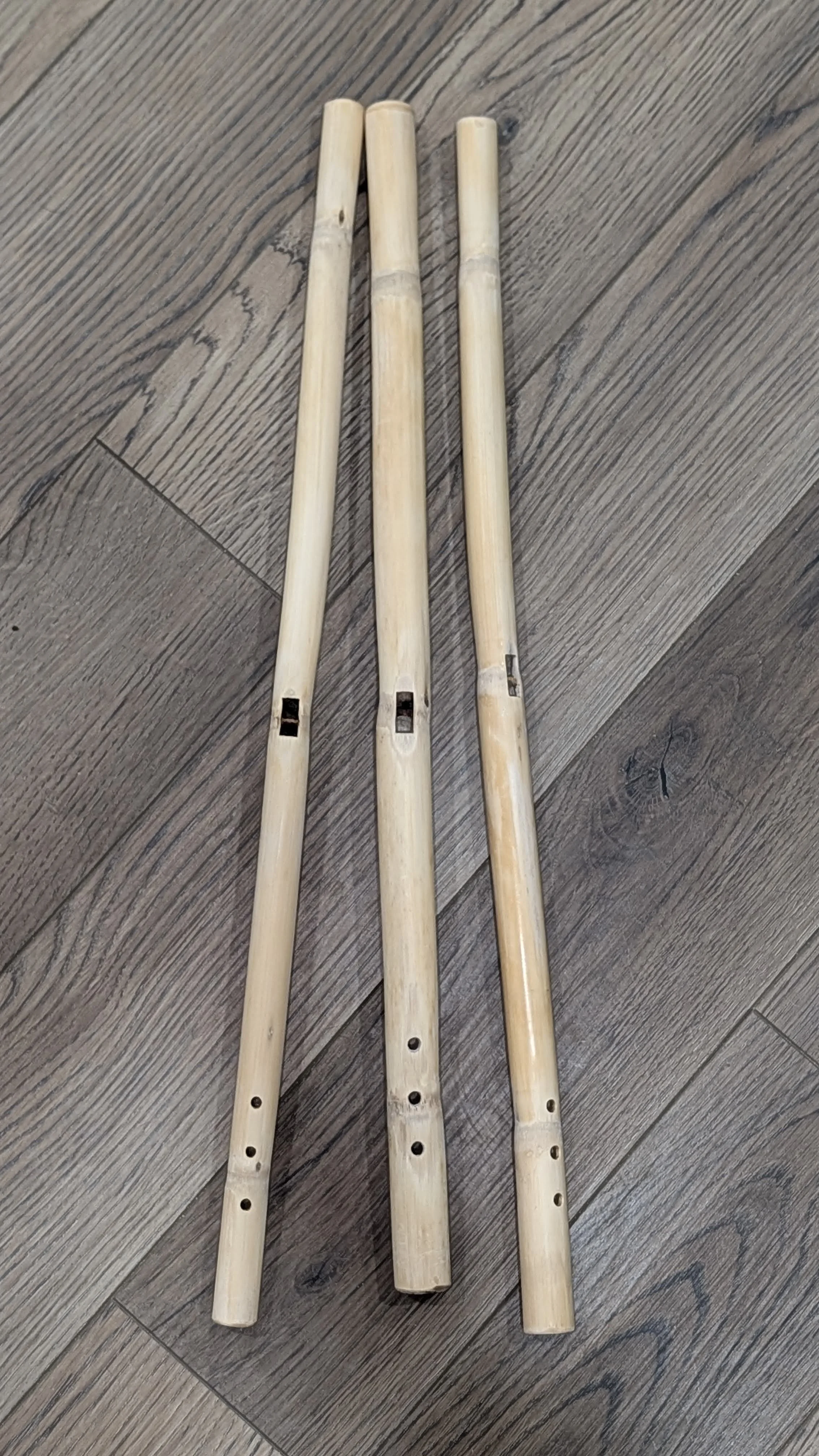
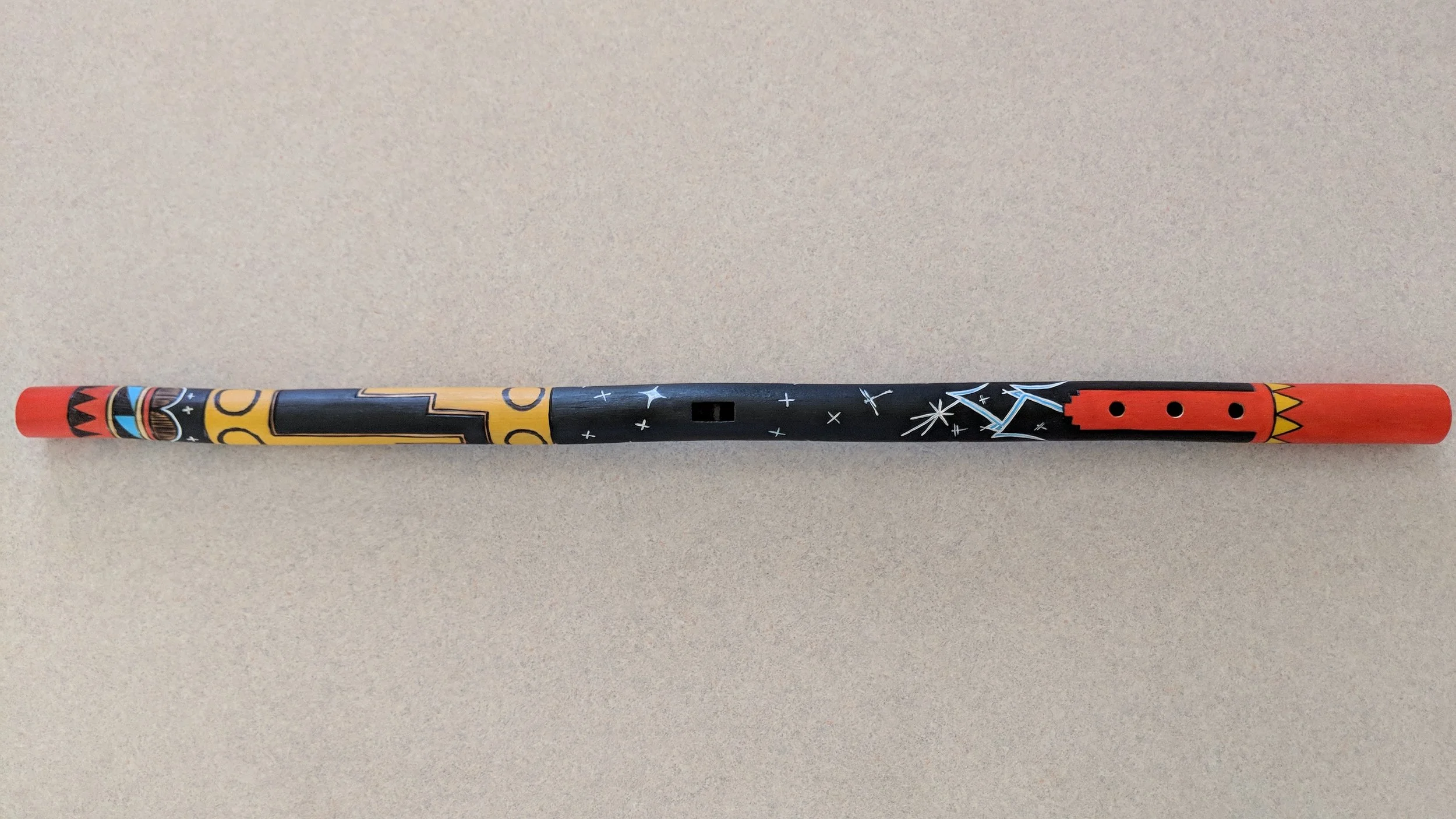
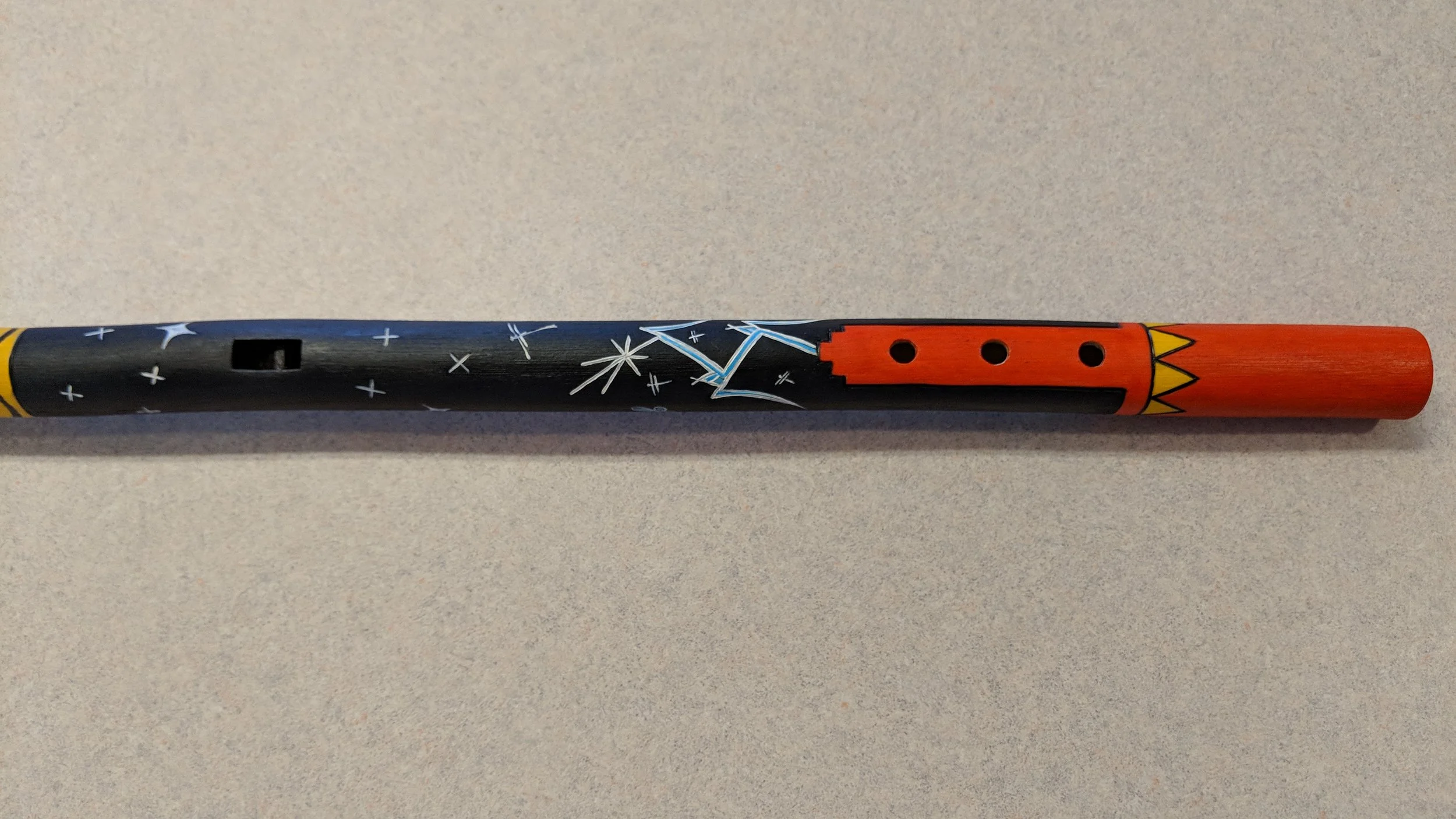
The instruments produce sound using the index finger of one hand to partially cover the sound hole, while the other hand opens and closes three finger holes to shape melody and pitch. This partial-cover technique alters the airstream and resonance, creating breathy timbres, microtonal inflections, and the distinctive ornamentation associated with the style. The three-hole fingering system supports modal scales and rapid melodic gestures through coordinated lifts and closures.
Suited for intermediate players, this design requires coordinated control of the partial-cover technique and finger-hole articulation to achieve its characteristic timbres and ornamentation. Mastery brings a wide expressive range—from haunting, sustained tones to lively, percussive ornamentation—making the instrument both versatile and deeply rooted in its cultural lineage.